
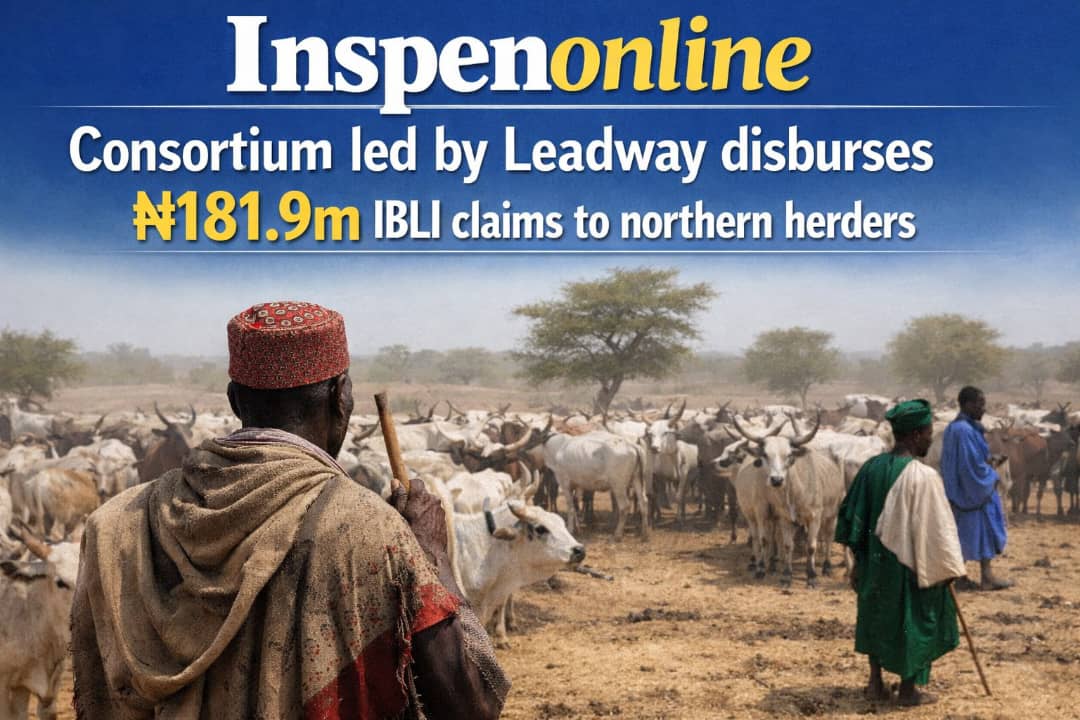
Consortium led by Leadway disburses ₦181.9m IBLI claims to northern herders
Kindly leave a comment and share
Chuks Udo Okonta
A consortium of leading Nigerian underwriters, spearheaded by Leadway Assurance Company Limited, has announced the disbursement of ₦181,917,900 in insurance claims to livestock herders across Adamawa, Bauchi, and Plateau States.
The payout, conducted under the Index-Based Livestock Insurance (IBLI) programme, aims to mitigate the impact of climate-induced losses on pastoral livelihoods. Leadway Assurance acted as the Lead Technical Partner, coordinating the effort alongside co-underwriters:
Rex Insurance Limited
NSIA Insurance Limited
AIICO Insurance Plc
Nigerian Agricultural Insurance Corporation (NAIC)
The IBLI model deviates from traditional indemnity-based insurance by utilizing satellite-based vegetation data. This data-driven approach triggers automatic payouts when grazing conditions deteriorate, allowing herders to purchase feed and prevent animal mortality without the delay of individual loss assessments.
The initiative is bolstered by a robust partnership framework involving:
Africa Reinsurance Corporation (Africa Re) – Project Reinsurer.
Livestock Productivity and Resilience Project (L-PRESS).
International Finance Corporation (IFC).
Speaking at the ceremony in Yola, Mr. Ayoola Fatona, Global Head, Agriculture Risk Solutions at Leadway Assurance, emphasized that the disbursement validates the efficacy of data-driven insurance in Nigeria.
“The IBLI claims payout underscores our commitment to delivering innovative solutions that protect livestock-dependent livelihoods. By deploying this solution, we are enhancing the adaptability of herders against the negative impacts of climate change and global warming,” Fatona stated.
The consortium reiterated its dedication to deepening insurance penetration and financial inclusion within the agricultural sector. By providing a safety net for livestock owners, the underwriters are actively contributing to the federal government’s food security agenda and stabilizing the socio-economic fabric of pastoral communities.