What exactly am I covered for – and what am I not covered for?
Kindly leave a comment and share
Blessing chuks Okonta
One of the mostcommon questions asked
by insurance buyers is also one of the most misunderstood: what exactly does my policy cover,and where does the cover stop?
For many policyholders, the reality of insurance only becomes clear at the point of making a claim. Unfortunately, that is often when unpleasant surprises emerge.
Insurance is not designed to cover every loss or inconvenience. Instead, it provides financial protection against clearly defined risks that are stated in the policy document.
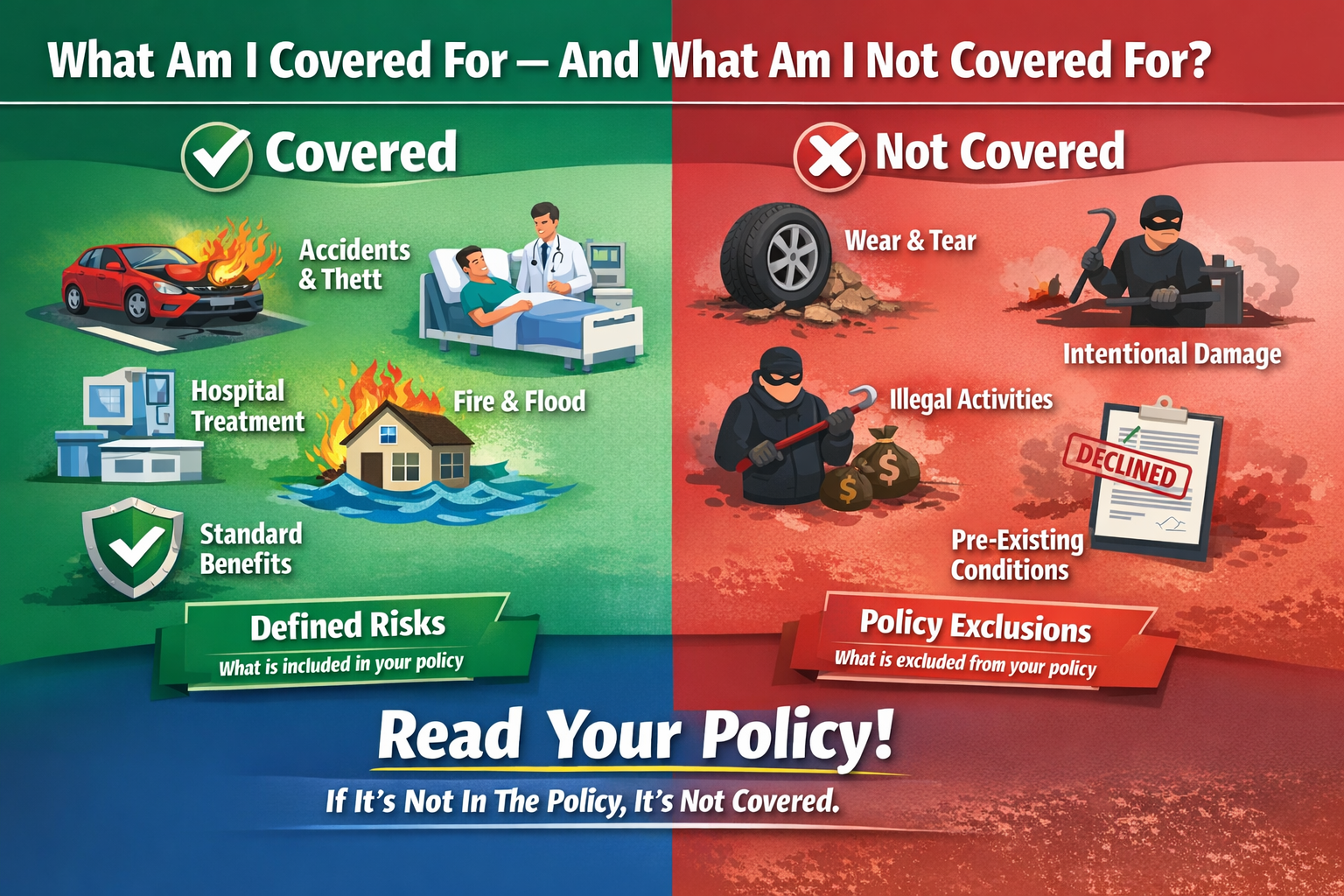
For instance, a comprehensive motor insurance policy typically covers accidental damage, fire, theft and third-party liability, while a third-party policy is limited to damage or injury caused to others. Health insurance may cover hospitalisation, surgery and prescribed treatments, but only within approved medical providers and defined limits.
In all cases, the scope of cover is outlined under sections such as “Insured Risks,” “Benefits,” or “Policy Coverage.” If an event falls within these provisions and all policy conditions are met, the insurer is contractually bound to pay the claim.
Equally important are policy exclusions—situations or losses the insurer will not pay for, regardless of whether a policy is active.
Common exclusions across insurance products include:
Wear and tear or gradual deterioration
Deliberate or fraudulent acts
Losses arising from illegal activities
Pre-existing medical conditions not declared or excluded
Use of insured assets outside the stated purpose
For example, a motor insurance policy may not respond to a claim if a private vehicle is used for commercial purposes. Similarly, health insurance policies often exclude cosmetic procedures and non-essential treatments.
Policy Conditions Matter
Coverage is also subject to compliance with policy conditions. These may include timely payment of premiums, prompt notification of losses, use of approved repairers or hospitals, and adherence to safety requirements.
Failure to meet these conditions can result in claim delays or outright repudiation, even where the loss itself is insured.
Why Policyholders Are Often Caught Off Guard
Insurance disputes frequently arise not from insurer bad faith, but from a lack of understanding by policyholders. Policy documents are often unread, misunderstood or ignored at the point of purchase.
Industry experts advise consumers to seek clarity before committing to a policy by asking critical questions about exclusions, limits, waiting periods and claims procedures.
Insurance is a legal contract, not a promise of unlimited protection. What is covered — and what is not — is clearly stated in the policy wording.
As industry professionals often emphasise: if it is not written in the policy, it is not covered.
Understanding this distinction remains one of the most important steps towards making insurance work when it matters most.